


It is probably impossible to find a single adult who does not know what "lumbar osteochondrosis" is.On average, one in three healthy middle-aged people, and sometimes more, has had an episode of acute lower back pain in their lifetime, and one in five or six indicate that such problems occur regularly and are even a "source" of sick leave.
Most often, however, patients cannot explain in detail what exact disorder has occurred in the back.Most of them have never been examined, and treatment consisting of "injections", "ointments" and massages usually helps for a period of several months to a year.
If you "press" such a patient and start asking him about the diagnosis, then, after suffering a little, he will say that he has "osteochondrosis".What does this disease mean in relation to the lumbar spine?
Osteochondrosis of the lumbar region - disease or "normal life"?
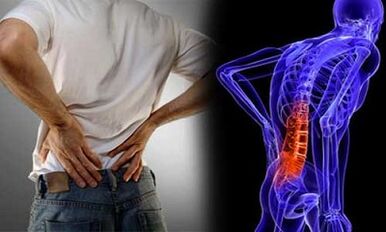
First of all, we must state with authority: "osteochondrosis" can do no harm.And it cannot manifest itself in any way, since this is a process of dystrophy and degeneration of the intervertebral discs, i.e.cartilage, which consists of the nucleus pulposus and the annulus fibrosus.The intervertebral disc is cartilage and is designed to act as a cushioning "air cushion" cushioning vertical and angular accelerations - braking between adjacent vertebrae.
As is known, cartilage is devoid of nerve and vascular tissue, therefore the processes taking place "purely in the discs" simply cannot affect the neighboring structures and do not manifest themselves in any way.A similar example in vertebroneurology is Schmorl's hernia, in which the hernial protrusion is reliably covered by the cancellous bone tissue of the adjacent vertebra.Intervertebral discs do not hurt.
Chondrosis (the suffix "-oz" means growth, enlargement) in this case is not entirely correct.During human life, there is no growth or enlargement of cartilage tissue.With fibrosis (cirrhosis) of the liver, you can notice that the mesh structure of the liver has begun to develop to the detriment of function.
And with chondrosis (or osteochondrosis), the intervertebral discs simply begin to change their configuration under the influence of long-term stress.
They cause pressure on the adjacent vertebrae, because according to Newton's law, any action in a static load produces exactly the same reaction or support reaction.How does osteochondrosis develop and for what reasons does this happen?
Causes of "lumbar osteochondrosis"
Signs of lumbar osteochondrosis (more precisely, intervertebral discs) can be detected at an early age, especially in various diseases of the musculoskeletal system.
These include for example:
- congenital anomalies (different leg length);
- different types of flat steps (longitudinal, transverse);
- deformations of the spine (scoliosis);
- spondylolisthesis (slipping of the lower lumbar vertebra from the sacrum back and forth).
All these diseases can cause either an increase in the impact load on the spine (for example, in flat feet, when the elasticity of the arch of the foot decreases), or in pronounced asymmetry of the spine, when the supporting function is realized systematically due to the load on the edge of the disc.
It is known that during experiments it was found that healthy and young cartilages, if they are given a load uniformly and statically over the entire surface, are able to withstand up to 2000 kg and even more without damage.Of course, such a load does not exist in everyday life, but it can increase to such values when exposed to the edge of the disk.
If the bearing area is 20 times smaller and the disc is not as strong (for example, in old age), then an impact of 60-80 kg (for example, falling on ice while leaning on the side, with a load on the shoulders) can cause destruction of the disc, which can be in the form of a bulge or hernia.
This is the appearance of a bulge or herniation, which indicates that the disc has deformed and even "popped out" on one or more sides.And as you know, there is no empty space around the disk.As soon as the disc begins to contact the nerve roots, adjacent ligaments and muscles, then the consequences of osteochondrosis arise: reflex pain and muscle-tonic syndromes that force the patient to consult a neurologist, chiropractor and massage therapist.
As long as the discs have a normal shape and wear evenly, without extreme loads, then osteochondrosis of the lumbar spine worries the patient no more than the usual age-related wear of the teeth, with which forensic scientists are well acquainted.How are reflex pain syndromes manifested?
Symptoms and signs of complicated lumbar osteochondrosis

You have already noticed that we diligently "spread" bridges: ordinary osteochondrosis is a completely inevitable process of normal aging of the elastic intervertebral "pads" in the "Homo sapiens" species, as it moves vertically throughout life.And "osteochondrosis", which patients with acute pain remember, is a complex condition.
Let's start, perhaps, with signs of radicular compression.Signs of lumbar osteochondrosis, of course, are associated with pain due to compression of the root of the segmental nerve by the disc.In addition to pain, sensory, motor and vegetative-trophic disorders are possible.
Pain in the lower back with osteochondrosis has the following characteristics:
1) Radicular pain.It is secondary and manifests as neuralgia when a swollen nerve root reacts very "violently" to a shock.
The pain is sharp, sudden, shooting, piercing the lower back, possibly radiating to the leg.The pain appears and instantly intensifies, which is why it is called "lumbago", or "lumbago".It is this type of "lumbago" that makes a person "stand up in a hurry", since any movement leads to increased pain.
In addition, the pain intensifies at the slightest cough, sneeze, strain, laugh - any situation in which the swollen root is shaken.
If the root is part of the sciatic nerve, the pain "shoots" through the buttock into the popliteal fossa and down, and this is called "lumbar sciatica".
2) Muscle pain.There are large muscle masses near the nerve root.Often in spring and autumn, they "cool down" and swell and become dense on their own.With them, venous outflow is difficult, and they themselves are a source of pain.
This pain is painful, constant and not so sharp.On the contrary, it increases not only with sudden movement, but also with prolonged stay in a monotonous position (deterioration of blood supply).
- Sometimes such a myofascial syndrome occurs after an exacerbation of a protrusion or hernia, when the sharp "hook" of the hernia "massages" the muscles and ligaments for a long time.
3) Traffic violations.Since the disc can compress not only the sensory but also the motor root, the development of peripheral paresis or even paralysis is possible.At different levels of damage, weakness in the legs may appear (for example, weakness when climbing stairs on one side), weakness in the foot, which leads to gait disturbance.
Muscle wasting occurs and one leg "goes weak".Such a purely motor, painless disorder is rare and, if left undetected, can lead to disability.
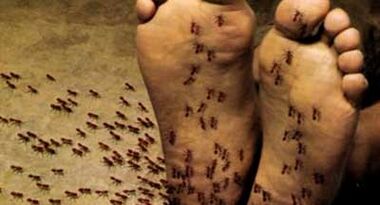
4) Sensory disturbances.They occur along with the pain and often exist after the pain ends, instead of the pain.They are manifested as numbness, reduced sensitivity of the skin of the legs in the form of "stripes", in the form of vertical stripes and a feeling of "creeping goosebumps" in the toes and feet.
- Sometimes, when the vegetative fibers are damaged, the symptoms are combined with hyperhidrosis, cold skin and impaired growth of hair and nails.
These are the most common signs of complicated lumbar osteochondrosis that exist in the lumbar region.There are separate syndromes, for example damage to the external cutaneous nerve of the thigh or damage to the cauda equina, epiconus, pure radiculitis or piriformis syndrome - but even a brief description of them would take too much time.
For patients, the above basic signs are enough to make an appointment with a neurologist.How can you "do-it-yourself aggravation relief"?How to treat lumbar osteochondrosis at home?
What to do during an exacerbation of lumbar osteochondrosis?
The basis of any treatment is etiotropic therapy (eliminating the cause) and pathogenetic treatment (affecting the mechanisms of the disease).It is accompanied by symptomatic therapy.
For vertebral pain (caused by problems in the spine), it goes like this:
- Eliminating the cause is removing the pressure from a bulge, hernia, or spasmodic muscle on the nerve root;
- The impact on the mechanisms is to remove muscle spasm, restore venous outflow in the muscles, remove swelling of the nerve root and fight inflammation;
- Eliminating symptoms (fighting pain, numbness, limited mobility) is carried out by returning to point #2, since removing swelling and inflammation, for example, will restore mobility and relieve pain.
Get rid of protrusion and hernia
As a rule, it is not a starting point for the treatment of acute back pain.Almost always, the pain syndrome is initially relieved, then after massage sessions and treatment by a chiropractor, all symptoms disappear and no surgery is necessary.
The question of surgical intervention arises with progression of weakness in the foot and with severe, unbearable pain for 2 months.In addition, surgery is required when there is a high level of compression of the central canal that contains the spinal cord or cauda equina.
Treatment of lumbar osteochondrosis, drugs
Treatment of lumbar osteochondrosis and its complications includes the following measures.In the acute phase (first day - two):
- To reduce swelling of the muscles and spine, a salt-free diet and limiting the amount of fluid consumed is indicated.You can even give a mild potassium-sparing diuretic tablet.
- It is recommended to wear a semi-rigid orthopedic corset, which protects the muscles from excessive movement.
- From the first days, it is recommended to rub in warming ointments containing NSAIDs and apply plasters, for example, plasters with pepper.
- During the acute phase, you cannot warm your back.As inflammation increases, swelling increases.Therefore, any heating pads are prohibited.You can warm yourself by removing your own heat (wool belt, warming ointments), which do not add it from the outside, but, on the contrary, take it from the depths to the outside.
- In the acute phase of lumbar osteochondrosis, short-term treatment can be carried out with intramuscular "injections" of NSAIDs and muscle relaxants.This will help relieve the swelling of nerve tissue, eliminate inflammation and normalize muscle tone.
In the subacute period, after overcoming the maximum pain, "injections" should no longer be given and attention should be paid to restorative means, for example, modern vitamin preparations of group "B".They effectively restore impaired sensitivity, reduce stiffness and paresthesia.
Physiotherapy measures continue, it's time for exercise therapy for osteochondrosis of the lumbar spine.Its task is to normalize blood circulation and muscle tone when the swelling and inflammation have already disappeared, but the muscle spasm has not yet been completely resolved.
Exercises for lumbar osteochondrosis of the spine should be performed after a slight general warm-up, on "warmed up muscles".
The main therapeutic factor is the movement, not the degree of muscle contraction.Therefore, to avoid relapse, the use of weights is not allowed;a gymnastic mat and a gymnastic bar are used.With their help, you can effectively restore range of motion.
Rubbing in ointments and using the Kuznetsov applicator continues.Swimming, underwater massage, Charcot shower are shown.During the fading stage of the exacerbation, home magnet therapy and physical therapy drugs are indicated.
Usually, treatment takes no more than a week, but in some cases, osteochondrosis can manifest itself with such dangerous symptoms that surgery may be required urgently.
Complications of lumbar osteochondrosis of the spine
We are talking, first of all, about a condition when the disc herniation has turned into an independent fragment and, penetrating the central canal, has formed a free sequestration.There it can press the nerves of the cauda equina and can suddenly (right in the gym, after an episode of acute pain) develop severe weakness or paralysis of the legs, numbness of the perineum.
After a few minutes, severe pain in the legs appears, after which reflex retention of urine or the appearance of incontinence is possible, and impotence develops.This occurred as cauda equina syndrome as a complication of a herniated disc.In this case, urgent intervention is necessary, removal of the sequestration and restoration of the function of the nerves of the cauda equina with their decompression.
However, other complications occur more often.With age, numerous hernias and protrusions appear, osteoporosis of the vertebrae appears, and mobility simply significantly decreases, and the risk of acute back pain increases.Such patients necessarily "take sick leave" several times a year and are often treated in sanatoriums.
Treatment prognosis
Osteochondrosis of the lumbar spine, the symptoms and treatment of which we considered above, as we understood, is for the most part not a disease at all, but simply a manifestation of inevitable aging and premature "shrinking" of the intervertebral discs.
Can humanity completely free itself from lumbar osteochondrosis?This answer can be answered in the affirmative, but then we will have to master a different style of movement: walking on all fours throughout our lives or, like Ichthyander, swimming in the depths of the ocean, constantly moving in the water from childhood.Then the axial, static loading of the intervertebral discs will disappear, and the signs of "chondrosis" will disappear along with it.But another problem will arise: in water, such a powerful structure will simply become unnecessary and begin to change until it disappears or is significantly reduced.
As for the personal, individual prognosis of osteochondrosis, everything depends on the time when the person "decided to come to his senses."If by this time there is no pronounced destruction of the intervertebral discs, protrusions, hernias and deformations, then, if you observe a healthy lifestyle and hygiene of physical activity, you may not have problems with the lower back until old age.
In the same case, when there is already a "hot spot" in the lumbar region, for example, in the form of a hernia that periodically compresses the nerve root, then one should be especially careful of uncomfortable bends, physical exertion, improper lifting of weights and seasonal hypothermia, which usually cause an exacerbation of spinal osteochondrosis.